Overview
Users struggled to calculate both market-based and location-based scope 2 emissions because emissions sources in the system supported only a single emissions factor and scope pairing.
To work around this, users had to duplicate utility data to create a second emissions record—resulting in a time-consuming, error-prone process that undermined the automation between EnergyCAP meters and emissions sources.
Research
Users consistently described the need to duplicate utility data to support multiple emissions calculations, highlighting a mismatch between system constraints and real-world reporting requirements.
From interviews, two potential solutions emerged:
Allow a single meter to link to multiple emissions sources
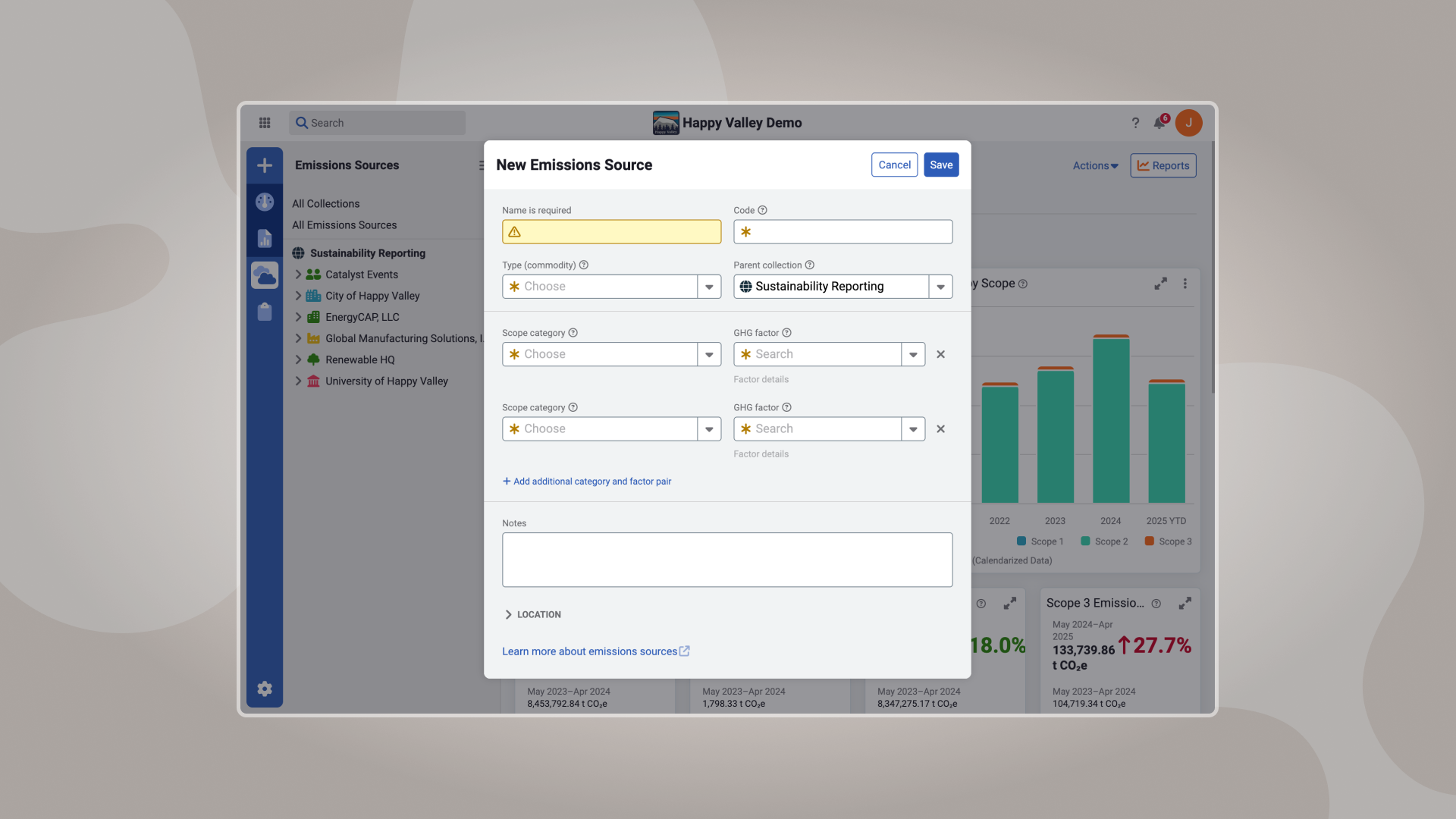
Allow a single emissions source to support multiple emissions factor/scope pairs
Both directions were explored through low- and mid-fidelity wireframes and validated through user interviews and stakeholder feedback sessions.
Direction
Linking a single meter to multiple emissions sources provided clear conceptual separation, but introduced significant complexity. It required users to manage more objects, increased UI overhead, and risked fragmenting data that users expected to remain centralized.
In contrast, allowing multiple emissions factor and scope pairs within a single emissions source aligned more closely with user expectations. It preserved the existing mental model, kept utility data centralized, and introduced flexibility without expanding system complexity.
Based on these tradeoffs, we moved forward with enhancing the emissions source rather than expanding the relationship between meters and sources.
Solution
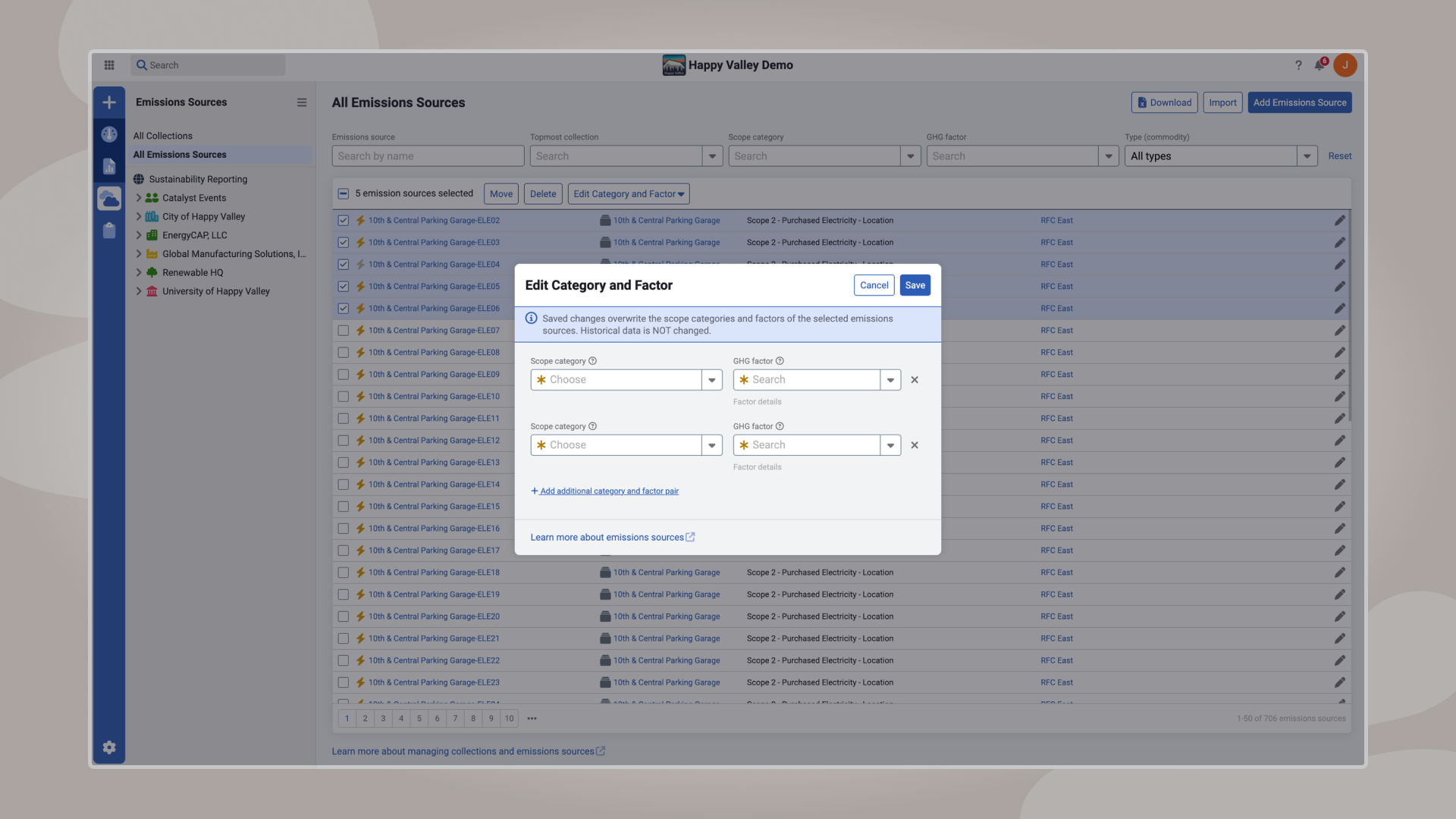
The final system allows a single emissions source to support multiple scope category and emissions factor pairs, enabling users to calculate both market-based and location-based emissions without duplicating data.
To support scalability, we also introduced:
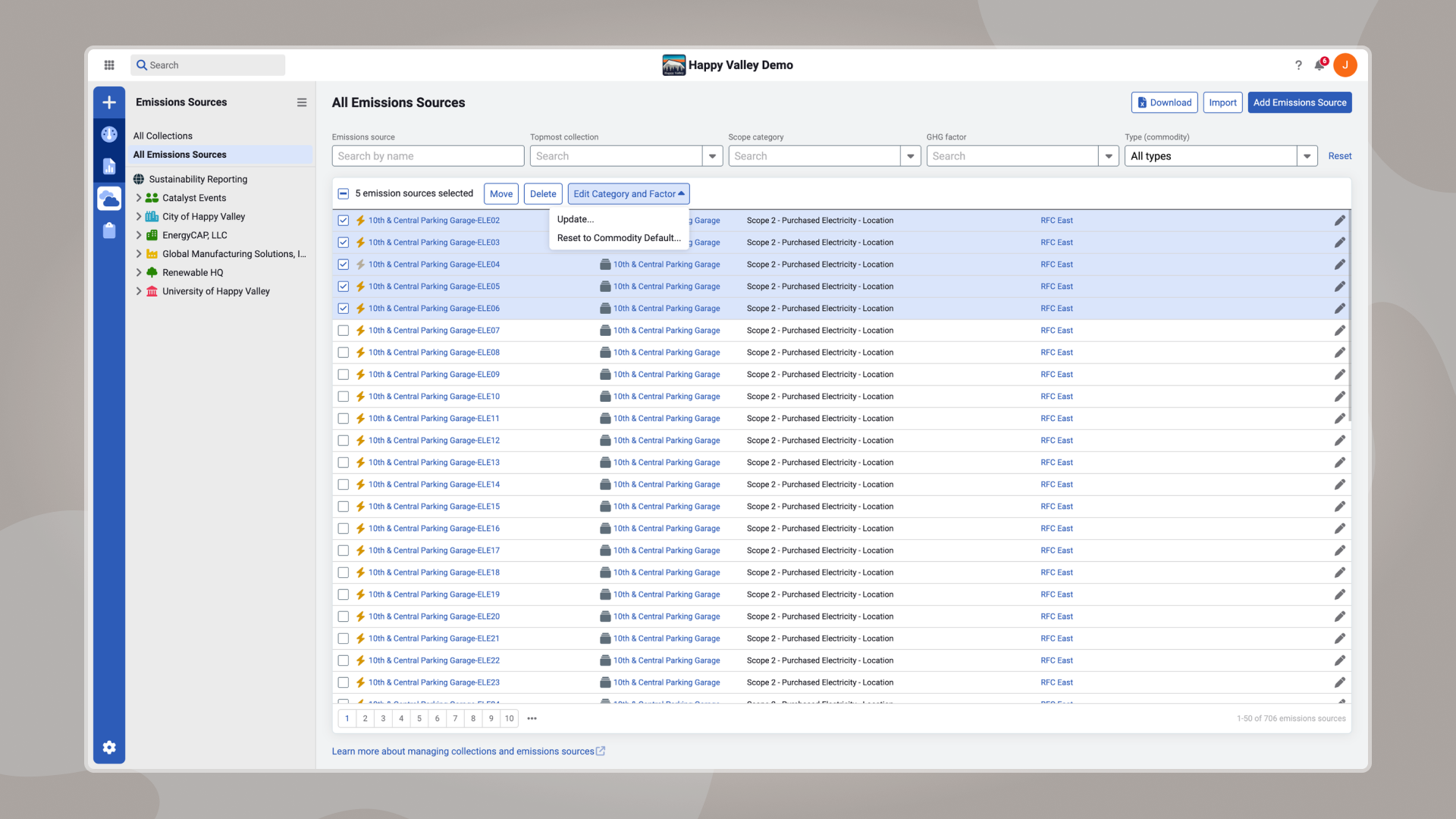
Bulk editing tools to apply multiple factor/scope pairs across groups of emissions sources
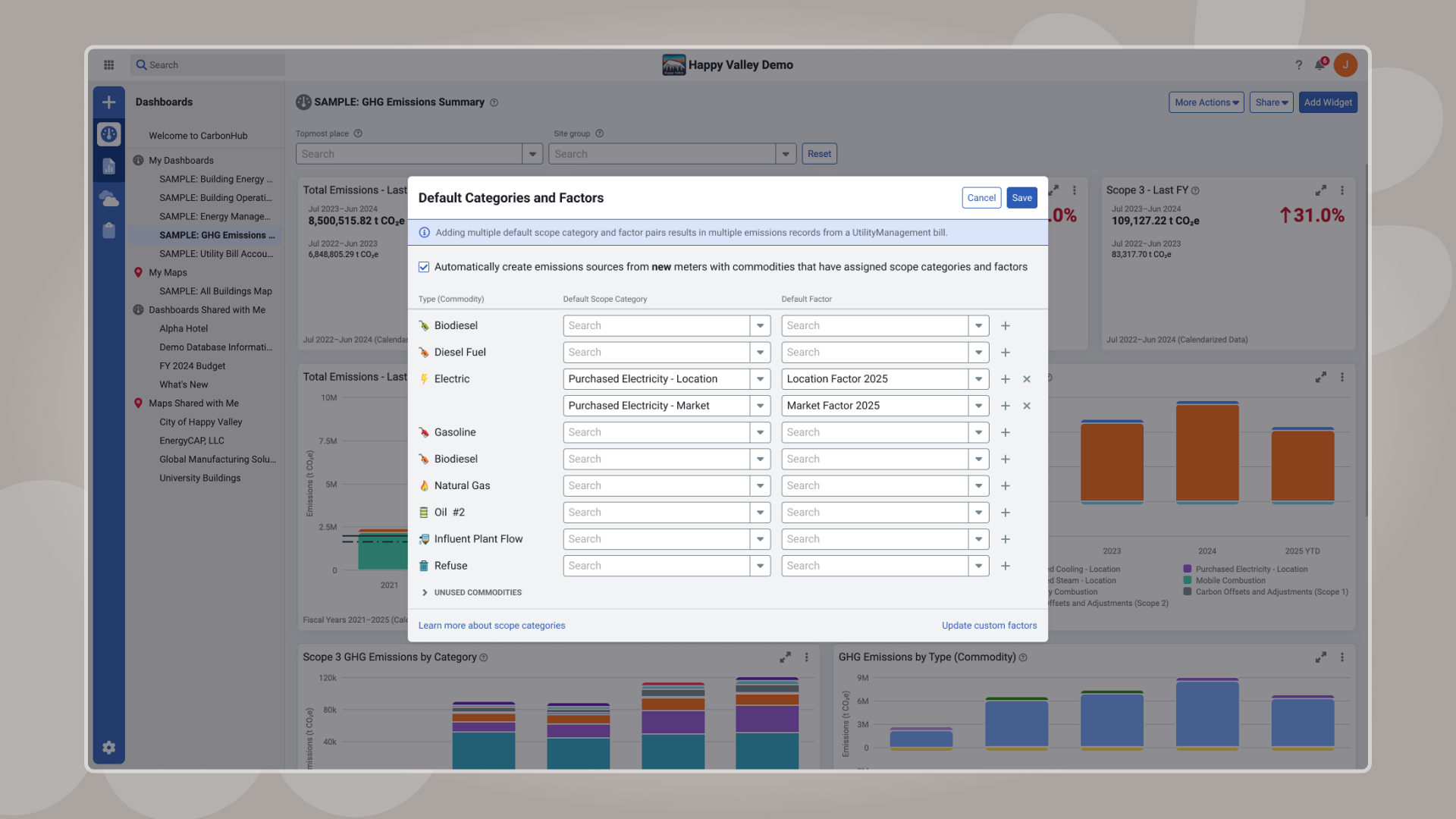
Default configurations by commodity to streamline setup and reduce repetitive work
These changes eliminated manual duplication, preserved automated data flows from EnergyCAP meters, and improved the completeness and reliability of emissions reporting.
Impact
Eliminated the need for manual data duplication when calculating scope 2 emissions
Reduced risk of user error and inconsistent reporting
Preserved automation between meters and emissions sources
Aligned the product with standard emissions reporting practices